
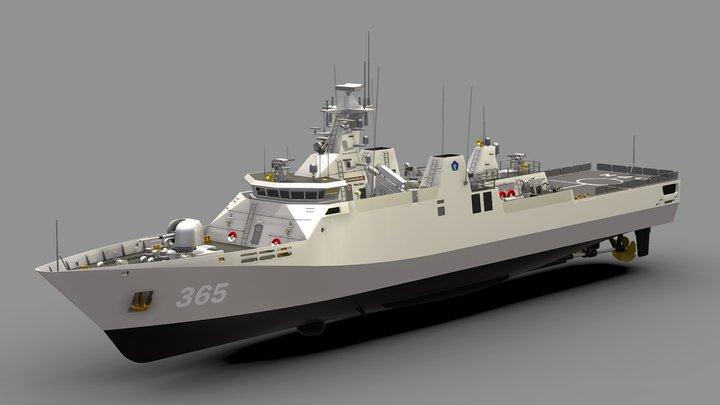
3D models are a game-changer for ship design, now what’s next?
The use of 3D digital twins for class approval represents a milestone in our ongoing focus on applying digitalization to increase productivity and shorten the calendar time for ship design, says Joonas Määttänen, project engineer at Deltamarin’s concept design department, in the company’s latest expert blog.
“Designing ships in a 3D digital environment is not in itself new,” Määttänen writes. “We already use advanced CAD software in our everyday work, and these applications get better with every new release. However, what we can’t yet do is to use the 3D models themselves for the classification approval process, where the relevant class society could review and comment on the design directly from the models.
“The traditional approval process – and this applies across the board – still requires us to supply the relevant class society with a vast amount of 2D structural drawings for every ship project. These we have to extract from the 3D models we have created, which is hugely time consuming. The effort that goes into them only increases as they get more detailed. For example, we recently built a detailed 3D model for the initial basic structural design of a regular-size Ro-pax vessel. From this we had to extract up to 50 separate sets of drawings each consisting of up to 1,000 individual drawing sheets. That is quite a mountain of material.